Halp! I iz stuck here. Stop painting stuff, plz.
 See how beeeg I am getting?
 Hallooooo!
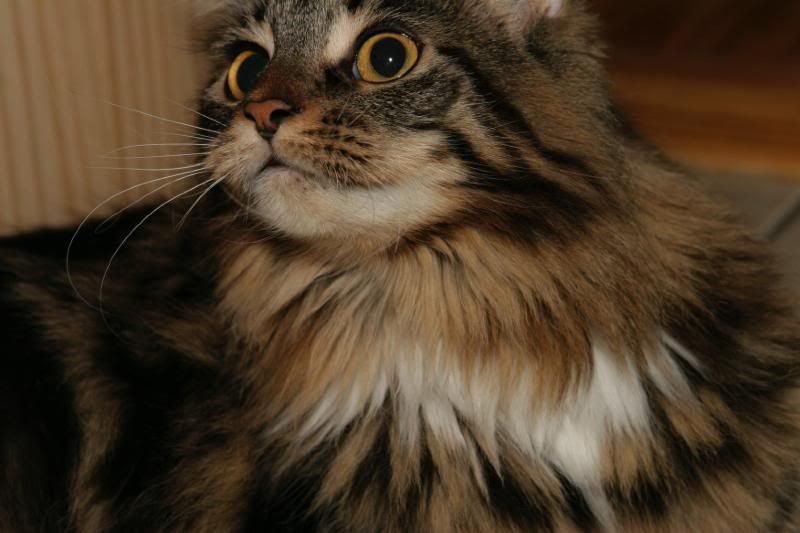 Doan go back to werk 4lgs. Stay homez and write movies and books and stuff.
Halp! I iz stuck here. Stop painting stuff, plz. See how beeeg I am getting? Hallooooo!Doan go back to werk 4lgs. Stay homez and write movies and books and stuff.
 See mah excellent furry tummeeee and mah tuftie toesies???
 I haz a magnificent ruff. Wut U got?
 U painting furnture? I halps U!
 Nao I do sum fizziks.
 Shhhh! Maddie is coming.
 Halloooo! wut U doing?
 Politiks iz boring.
 We plays wit milk ring sted?
 Feh. Maddie iz not serious.


This symmetric cloud dubbed the Boomerang Nebula was created by a high-speed wind of gas and dust blowing from an aging central star at speeds of nearly 600,000 kilometers per hour. The rapid expansion has cooled molecules in the nebular gas to about one degree above absolute zero - colder than even the cosmic background radiation - making it the coldest known region in the distant Universe. Shining with light from the central star reflected by dust, the frigid Boomerang Nebula is believed to be a star or stellar system evolving toward the planetary nebula phase. This Hubble image was recorded using polarizing filters (analogous to polaroid sunglasses) and color coded by the angle associated with the polarized light. The gorgeous result traces the small dust particles responsible for polarizing and scattering the light. The Boomerang Nebula spans about one light year and lies about 5,000 light years away toward the constellation Centaurus.Courtesy of Astronomy Picture of the Day. The image is from Hubble, of course


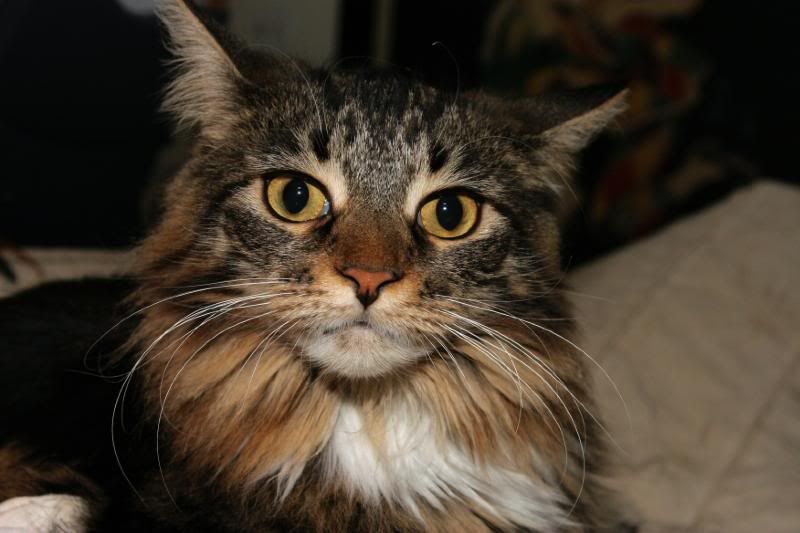 Whut U mean teh rugs need teh vaacoooming?
 We dust insted, kai?
 U cleaning? I halps U!!!
 Wait! U going to VAAACOOOM! I not halps U, I'ze outie! kai bai!

Jens Hackmann took this stunning picture of a lightning storm near the Weikerscheim Observatory; the 300 second exposure is enough to see the stars streak and the observatory lit up by ambient light. Sometimes, when it’s cloudy, observing is difficult… but you can still get incredible pictures.I agree with Plait, astronomy IS the most lovely science.


 HALP! I iz caught in teh tractor beam and teh death star iz pulling me ins.... HALP!!
 I haz a bad feeling about this....


 I'ze off to menace Paris. BRB. kai thx bai
 Halloooooooo!Curleee whisker palooooza
 I haz a milk ring


 I haz teddy bear. I hopes Santy brings me many toyz
 Me too!!!
 SAAANNNTTAAA!!
 I haz been rly guud kitteh... rlys!

 Posts
All Comments