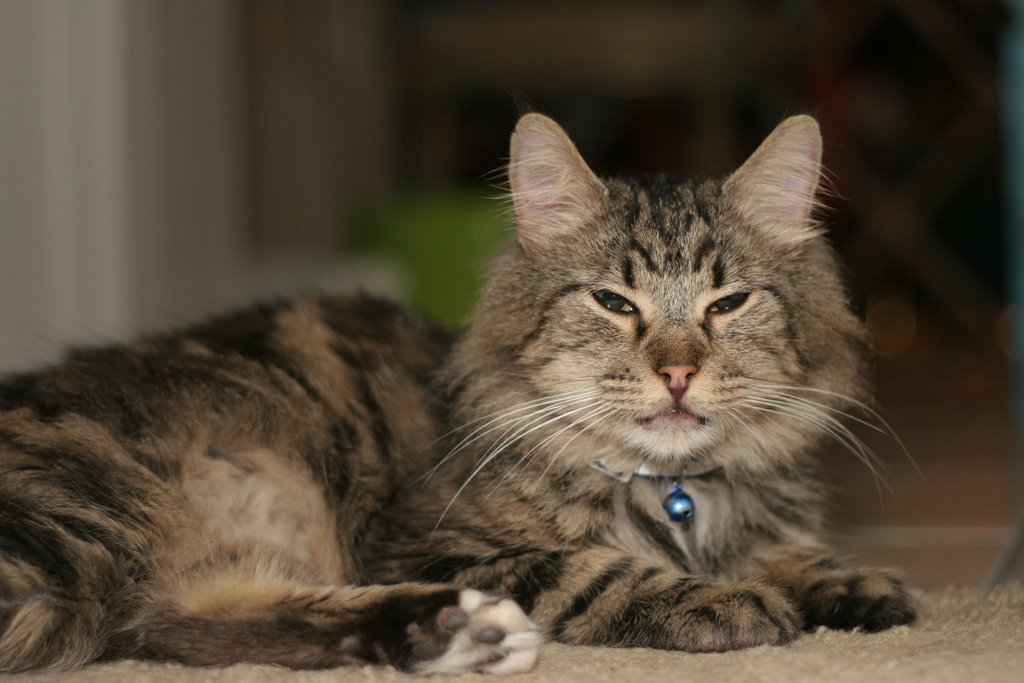
It's the fabulous Flory's birthday today!!! Maxx sends her many, many purrrrs and offers to share his birthday paté with her. What a nice kitty.
Karl Rove Taking Bullets?
Never one to let the facts or delicious irony stand in the way of a vicious political smear, today Karl Rove took a swipe at war heros Sen. John Kerry and Rep. John Murtha, stating, "They may be with you for the first few bullets but they won't be there for the last tough battles." Rove, of course, never served in battle, dodging the draft for nearly three years of the Vietnam War. He's in good company, though-- the Vice President received five deferments from going into battle himself.
"Unfortunately for the American military, Dick Cheney, Karl Rove and their merry band of draft-dodgers won't be with you for the first few bullets, the last tough battles, or anywhere along the way," said Christy Setzer, Communications Director, Senate Majority Project.

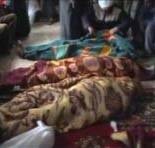
A sergeant who led a squad of Marines during the incident in Haditha, Iraq, that left as many as 24 civilians dead said his unit did not intentionally target any civilians, followed military rules of engagement and never tried to cover up the shootings, his attorney said.
Staff Sgt. Frank D. Wuterich, 26, told his attorney that several civilians were killed Nov. 19 when his squad went after insurgents who were firing at them from inside a house. The Marine said there was no vengeful massacre, but he described a house-to-house hunt that went tragically awry in the middle of a chaotic battlefield.
-snip-
Wuterich told his attorney in initial interviews over nearly 12 hours last week that the shootings were the unfortunate result of a methodical sweep for enemies in a firefight. Two attorneys for other Marines involved in the incident said Wuterich's account is consistent with those they had heard from their clients.
Kevin B. McDermott, who is representing Capt. Lucas M. McConnell, the Kilo Company commander, said Wuterich and other Marines informed McConnell on the day of the incident that at least 15 civilians were killed by "a mixture of small-arms fire and shrapnel as a result of grenades" after the Marines responded to an attack from a house.
Gary Myers, a civilian attorney for a Marine who was with Wuterich that day, said the Marines followed standard operating procedures when they "cleared" the houses, using fragmentation grenades and gunshots to respond to an immediate threat.
-snip-
The defense attorneys said the rules of engagement -- which vary depending on the mission, level of danger and other factors -- are likely to become a central element of their cases because those rules guide how troops can use deadly force on the battlefield. One Marine official said such rules usually require positive identification of a target before shooting but noted that the rules are often circumstantial.
"Once you go back over it, you have to determine if they applied the rules," the Marine official said, speaking on the condition of anonymity because the Marine Corps does not discuss rules of engagement. "Did they feel threatened? Did they perceive hostile intent or hostile action?"
A four-man team of Marines, including Wuterich, kicked in the door and found a series of empty rooms, noticing quickly that there was one room with a closed door and people rustling behind it, Puckett said. They then kicked in that door, tossed a fragmentation grenade into the room, and one Marine fired a series of "clearing rounds" through the dust and smoke, killing several people, Puckett said.
Although it was almost immediately apparent to the Marines that the people dead in the room were men, women and children -- most likely civilians -- they also noticed a back door ajar and believed that insurgents had slipped through to a house nearby, Puckett said. The Marines stealthily moved to the second house, kicking in the door, killing one man inside and then using a frag grenade and more gunfire to clear another room full of people, he said.
Marine Reserve Lt. Jonathan Morgenstein, who served in Anbar province from August 2004 to March 2005, said that the account offered by Wuterich's attorney surprised him a bit.
"When I was in Iraq," Morgenstein said, "the Anbar-wide ROEs [rules of engagement] did not say we had the authority to knock down any door, throw in a hand grenade and kill everyone." Still, he said, if someone in a house in Haditha was shooting at them, the Marines' response may have been within procedure. "If they felt they took fire from that house, then that may be authorized."
A Marine who served near Haditha in November said it was not unusual for Marines to respond to attacks "running and gunning" and that it was standard practice to spray rooms with gunfire when threatened. "It may be a bad tactic, but it works," he said. "It keeps you alive."


 AP/Jesse Cohen
The Texas Election Code permits a candidate to withdraw. However, the Legislature attached a cost to withdraw after a primary. If a candidate withdraws after his party’s primary, the party cannot substitute another candidate for the withdrawing candidate. The reason for this rule is simple – the Legislature did not want the candidates duping voters into contributing money and energy to the candidate in the primary, only to watch the candidate take the money and run, not in the general election, but to the bank. So the law places the burden on the party in whose primary the candidate ran – in this instance the Republican party – to make sure that candidates in the party’s primary intend to and will run in the general election. If the Party fails to impose this discipline, the penalty is that the Party cannot insert another candidate into the race for District 22.
"Plaintiffs are entitled to a Temporary Restraining Order because it is probable they will prevail against Defendant and obtain a permanent injunction . If the Temporary Restraining Order is not granted, irreparable harm is imminent, as the meeting (the local District Executive Committee) is expected to be called at any moment. My emphasis added.
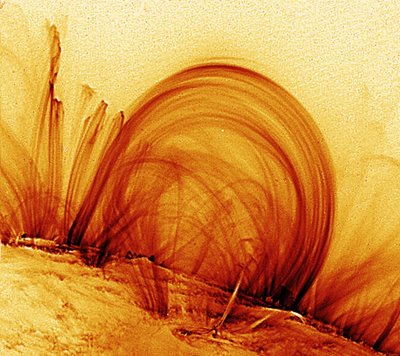
The surface of the sun as observed by the Transition Region and Coronal Explorer (TRACE) in high temporal and spatial resolution. From coronal filaments, loops and mass ejections, magnetic arcades, ultraviolet and X-ray storms, and escaping prominences, earth-bound to create spectacular auroral displays or to wreak havoc on power grids and satellite telecommunication systems -- all archived in one giant database.


 AP/Charles Dharapak


A flurry of new images from ground and space telescopes is refining astronomers' ideas about the Milky Way's galactic neighbor Andromeda.
The images were taken with NASA's Spitzer and Chandra Space Telescopes and at the Gemini North Observatory on Mauna Kea, Hawaii.
The pictures reveal new details about Andromeda's central bulge and inner disk, while also peering into its very heart to uncover the source of mysterious pinpricks of light. Meanwhile, a mosaic made from thousands of individual images captures the total amount of infrared light emitted by the galaxy, allowing astronomers to calculate Andromeda's "weight" and determine how many stars form in the galaxy per year.
The new images were presented Monday at the 208th annual meeting of the American Astronomical Society in Calgary, Canada.
BAGHDAD, June 5 -- "Turn back," a friend told Haji Abu Shamaa as he walked Monday morning toward his money-changing shop in the Karkh neighborhood of central Baghdad, a mile north of the heavily guarded Green Zone. "The Interior Ministry police are rounding up people."
But Shamaa walked on, right into a swift, coordinated operation unfolding within sight of Iraq's Ministry of Justice. Gunmen in police uniforms and ski masks had cordoned off the street and were swiftly shoving captives, four or five at a time, into a dozen waiting pickup trucks. Fifteen minutes later, the trucks were gone, and so were 56 people.
The roundup displayed all the signs of an unrelenting kidnapping epidemic in Baghdad. Since the U.S.-led invasion in 2003, more than 400 foreigners have been abducted in Iraq, but thousands more Iraqis have been snatched from the streets, often by people wearing knockoff police uniforms that are easily purchased at local markets.

A chain of tiny, remote Hawaiian islands could become the largest marine sanctuary in the U.S. as soon as next year.
But the rare wildlife living there could disappear beneath the waves by the end of this century because of global warming, a new study warns.
A team of Hawaii-based scientists calculates that two-thirds of some islands in the Northwestern Hawaiian Islands (NWHI) could be submerged by 2100.
Judiciary Committee Chairman Arlen Specter, R-Pa., said he will vote against the measure on the floor but allowed it to get there in part to give the GOP the debate party leaders believe will pay off on Election Day. Specter has chosen a different battle with the Bush administration this week — a hearing Tuesday on the ways the FBI spies on journalists who publish classified information.
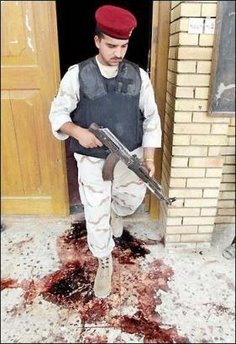 AFP/Essam Al-Sudani
The victims included youths of around 15-16 years who were on their way to the bigger regional town of Baquba to write end of term exams, but also elderly men, they said.
"(The attackers) dragged them one by one from their cars and executed them," said a police official.
The killings took place in Diyala province, scene of frequent attacks by insurgents waging a campaign of bombings and shootings to topple the U.S.-backed, Shi'ite-led government.
Some tried to flee but were gunned down, a police source said. Reuters photographs showed six men shot in the chest, including one old man and five young men.
In Iraq's south, a Sunni religious group accused security forces in the Shi'ite-run city of Basra of killing 12 unarmed worshippers in a mosque early on Sunday, but police said they had returned fire and shot dead nine terrorists.
The incident came just hours after a car bomb killed 28 people in Basra, challenging a state of emergency declared by Prime Minister Nuri al-Maliki to crack down on criminal gangs and Shi'ite factions whose feuding threatens oil exports.

 Bence Máté/National Geographic
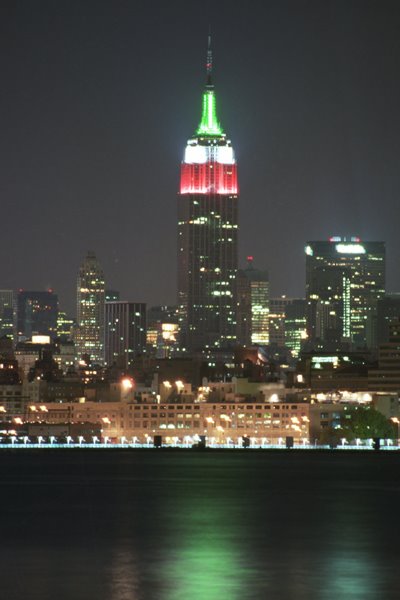
New York has no national monuments or icons, according to the Department of Homeland Security form obtained by ABC News. That was a key factor used to determine that New York City should have its anti-terror funds slashed by 40 percent--from $207.5 million in 2005 to $124.4 million in 2006.
"All I can tell you is if you look at their worksheets, and it says that New York City doesn't have any high visibility national icons ... I mean, I don't have to list the Brooklyn Bridge, the United Nations, Rockefeller Center, the Statue of Liberty, Empire State Building and the Stock Exchange," New York Mayor Michael Bloomberg said in response to ABC News' questions.
The formula did not consider as landmarks or icons: The Empire State Building, The United Nations, The Statue of Liberty and others found on several terror target hit lists. It also left off notable landmarks, such as the New York Public Library, Times Square, City Hall and at least three of the nation's most renowned museums: The Guggenheim, The Metropolitan and The Museum of Natural History.
The federal agency distributing $711 million in antiterrorism money to cities around the nation found numerous flaws in New York City's application and gave poor grades to many of its proposals.
Its criticism extended to some of the city's most highly publicized counterterrorism measures.
In a report that outlines why it cut back New York City's share of antiterrorism funds by roughly 40 percent, the Department of Homeland Security was so critical of some highly viewed local measures — like Operation Atlas, in which hundreds of extra police officers carry out counterterrorism duties around the city each day — that the Police Department and other city agencies must now seek further federal approval before drawing on the money they were given to pay for those programs.
The city's application was evaluated by so-called peer-review panels of five to seven people with varying backgrounds from 47 states and affirmed by government analysts at the Department of Homeland Security.
Angry officials in New York zeroed in on the peer review process yesterday, trying to determine who evaluated the programs and whether their judgments were clouded by a desire to steer security money to their own areas. City officials questioned whether the reviewers had expertise in antiterrorism efforts.
 Richard Perry/NYTimes
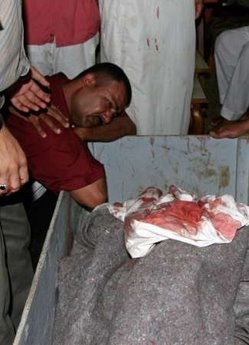 Reuters/Helmiy Al-Azawi
 AFP/Gali Tibbon
 AP/Khalid Mohammed
What an appalling and tragic story. It is, I suppose, only a tiny blot compared to the carnage that Iraqi militants inflict on each other every single day in this endless and brutal war, but this one is our blot.


 Posts
All Comments
Posts
All Comments